

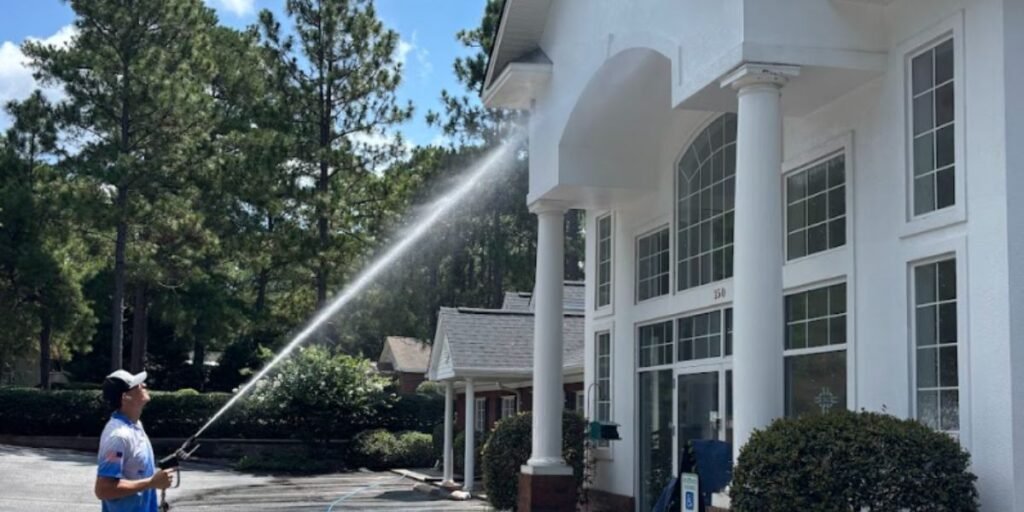
Soft Wash Pressure Washing: The Smart Way to Protect and Beautify Your Home
Your home’s exterior takes a beating year-round. Between humidity, pollen, mold spores, algae, and the general grime that settles on every surface, it doesn’t take long for a house to go from sharp-looking to dingy. A lot of homeowners assume that means blasting everything with a pressure washer, but that approach can do more harm than good. Soft wash pressure washing is the method that actually gets the job done without the risk of damage. At Carolina Shine Exteriors, we see the difference it makes on homes every single week. So what exactly is it, why does it work better than traditional high-pressure methods, and when should you consider calling in professionals? Let’s walk through it. What Is Soft Wash Pressure Washing? Soft wash pressure washing combines low water pressure with specially formulated cleaning solutions to remove dirt, algae, mold, mildew, and biological growth from exterior surfaces. Instead of relying on brute force to strip away grime, it uses biodegradable detergents that break down contaminants at the source, killing them rather than just pushing them around. The water pressure used in soft washing typically runs between 100 and 500 PSI, compared to the 1,500 to 3,000+ PSI of a standard pressure washer. That lower pressure means no cracked siding, no stripped paint, no damaged mortar, and no blown-out window seals. The cleaning solution does the heavy lifting, and water rinses the surface clean. This method is particularly effective on surfaces that high-pressure water would damage, such as painted wood, stucco, EIFS (synthetic stucco), vinyl siding, and asphalt shingles. For these materials, soft washing services aren’t just preferable; they’re the only responsible approach. Why High-Pressure Washing Isn’t Always the Answer It’s easy to assume that more pressure equals a deeper clean. In reality, high-pressure washing on the wrong surfaces can drive water behind siding, strip protective coatings, loosen roof granules, and accelerate wear on surfaces that were fine before you started. Algae and mold are also biological problems, not just surface stains. Blasting them with high pressure removes the visible growth but leaves behind the roots and spores. Within weeks, you’ll notice the same dark streaks and green patches returning. Soft wash pressure washing uses solutions that kill the organism entirely, so the clean lasts significantly longer, often two to three times as long as a traditional pressure wash. For roofs, especially, high-pressure cleaning is actively discouraged by most roofing manufacturers. Many asphalt shingle warranties are voided by power washing. Professional roof cleaning done with the soft wash method is both safer and more effective for eliminating algae and moss without shortening the life of your shingles. What Surfaces Benefit Most from Soft Washing? Soft wash pressure washing works across a wide range of exterior surfaces. The most common applications include: Siding: Vinyl, wood, fiber cement, and stucco all respond well to soft washing. The low pressure won’t force water into joints or lift paint, and the cleaning solution removes algae and oxidation that builds up over time. Roofs: Algae (specifically Gloeocapsa magma, the organism behind those black streaks) thrives in North Carolina’s humid climate. Soft washing eliminates it safely without voiding warranties or knocking off granules. Decks and fences: Wood surfaces benefit from a gentle clean before sealing or staining. Deck and fence cleaning done correctly preserves the wood grain and prepares the surface for treatment rather than damaging it. Driveways and walkways: Concrete and pavers can handle a bit more pressure, but soft washing still helps when heavy biological growth is involved, since the detergent kills moss and mildew at the root. Gutters: Black streaking on gutters (caused by oxidation and biological growth) responds well to soft washing, cleaning the surface without bending or denting the aluminum. The Benefits of Residential Soft Washing Residential soft washing isn’t just about aesthetics, though a freshly cleaned exterior makes a real difference in curb appeal. The practical benefits go deeper: It extends the life of your surfaces: Algae and mold don’t just look bad; they eat into surfaces over time. Left unchecked, biological growth can shorten the lifespan of roofing, siding, and wood. Regular soft washing removes these threats before they cause lasting damage. It protects your investment: Your home is likely the largest asset you own. Routine exterior cleaning preserves its value and prevents the kind of deterioration that leads to costly repairs or replacements down the road. It keeps your family healthier: Mold and mildew on exterior surfaces can work their way indoors through ventilation gaps and windows. Removing them from the outside reduces indoor air quality issues, a benefit most homeowners don’t immediately think about. It’s environmentally responsible: The biodegradable detergents used in professional soft washing company applications are formulated to break down safely, posing minimal risk to landscaping, pets, and surrounding waterways when applied correctly. How Often Should You Schedule Soft Washing? For most homes in North Carolina, once a year is a solid baseline. The humid climate, pine trees, and seasonal pollen create ideal conditions for algae and mold to thrive, which means exterior surfaces tend to build up faster here than in drier climates. That said, a few factors should influence your schedule: For a full picture of what’s involved in maintaining your home’s exterior throughout the year, the exterior house washing guide covers the seasonal considerations specific to this region in detail. If you’ve had your home washed before and it returned to looking dirty faster than expected, that’s usually a sign that high-pressure methods were used. Switching to a proper soft wash approach makes a noticeable difference in how long results hold. What to Look for in a Soft Washing Company Not every exterior cleaning company uses the same methods or takes the same care with your property. When evaluating a soft washing company, a few things are worth checking: Do they use proper soft wash equipment? True soft washing uses dedicated low-pressure systems, not just a pressure washer with the pressure dialed down. Ask specifically about their equipment and process. Are their