A pressure washer feels like the fastest way to knock pollen, grime, and mildew off your patio set. But that same force can strip finishes, crack wicker, or push water into cushions where it has no business being. Pressure washing patio furniture isn’t automatically risky, but doing it without the right approach can leave you with damage instead of a clean set.
This guide breaks down what actually causes harm, which materials hold up, and how to clean patio furniture safely without guesswork.
Why Homeowners Worry About Pressure Washing Patio Furniture
Patio furniture sits outside all season, collecting dust, pollen, bird droppings, and mildew. A pressure washer seems like the obvious fix since it already handles siding and driveways.
The concern is valid. Outdoor furniture is built from thinner materials than a house exterior, and a wand set to house-washing pressure can dent, gouge, or discolor a chair in seconds.
What Happens When You Pressure Wash Outdoor Furniture the Wrong Way
High PSI and Delicate Materials Don’t Mix
Most residential pressure washers run between 1,300 and 2,800 PSI. That’s fine for concrete, but patio furniture rarely needs more than 500 to 800 PSI to come clean. Anything higher can chip paint, crack plastic resin, or splinter wood fibers.
Wrong Nozzle, Wrong Result
A narrow, zero-degree nozzle concentrates water into a tight, forceful stream. On furniture, that stream can etch lines into soft wood, peel protective coatings, or force water into joints and seams where mildew will grow later.
Which Patio Furniture Materials Handle Pressure Washing Well
Metal and Aluminum Frames
Powder-coated metal and aluminum frames are among the most forgiving surfaces for a pressure washer for outdoor furniture. A wide-angle nozzle at low PSI clears dirt from crevices without harming the coating, as long as you keep the wand moving and don’t linger on one spot.
Sealed Wood and Teak
Sealed wood and teak tolerate light pressure washing when the sealant is intact. Going in with the grain, using a fan-tip nozzle, and staying at least 12 inches back keeps the wood fibers from lifting or splitting.
Materials That Need a Gentler Approach
Wicker and Rattan
Wicker and rattan are woven from thin strands that trap water inside the weave. High pressure can snap individual strands or force moisture into the core, leading to mold that shows up weeks later. A soft brush and hose rinse work better here.
Cushions and Fabric Coverings
Cushions absorb water fast and dry slowly, which invites mildew inside the foam. Pressure washing cushions is one of the most common ways homeowners end up with a permanent mildew smell. Removable covers should come off and get hand washed or machine washed instead.
How to Pressure Wash Patio Furniture Safely
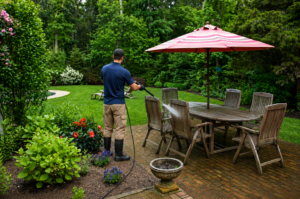
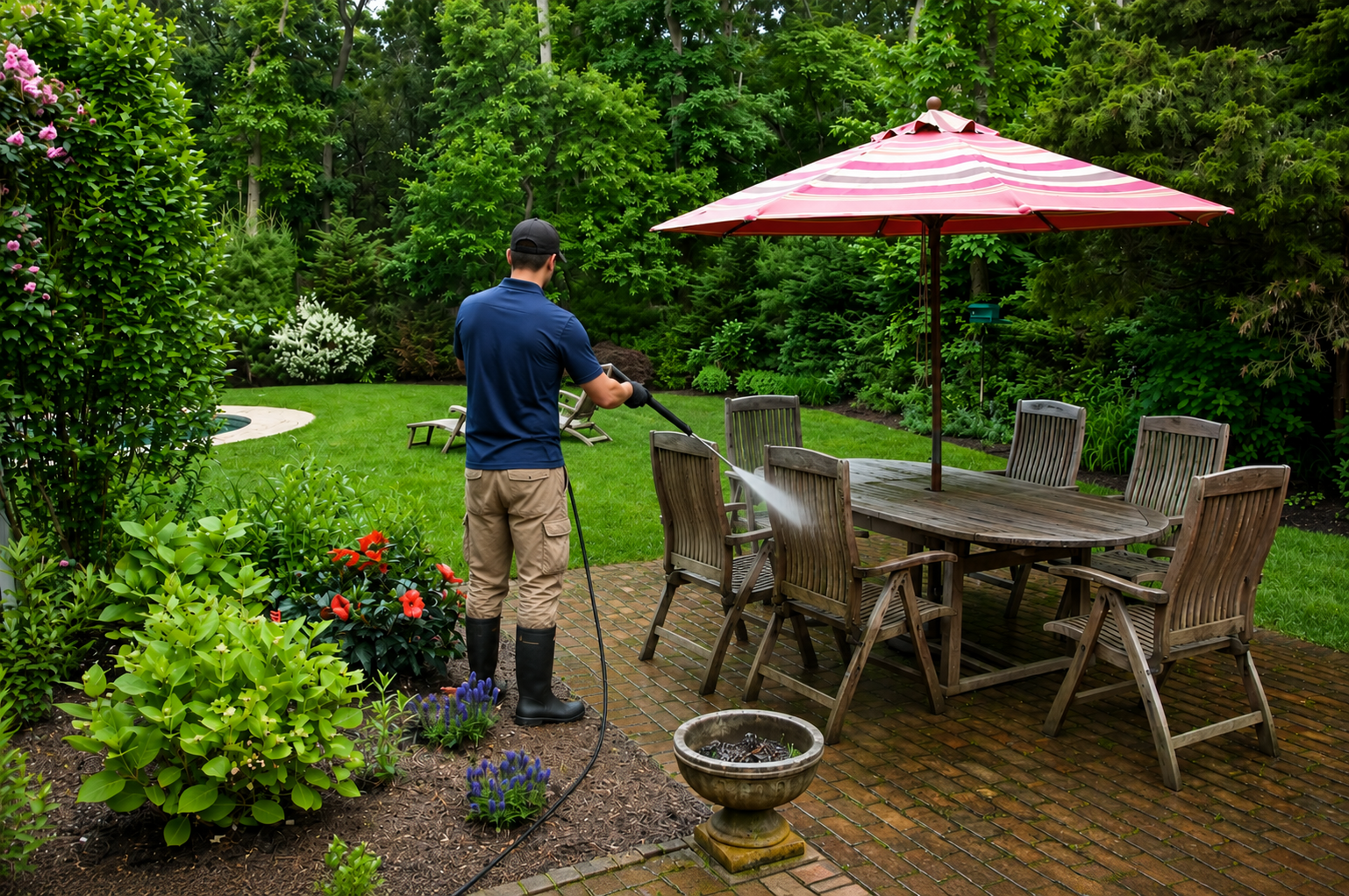
Safe pressure washing techniques start with matching PSI to the material, not the machine’s maximum setting. A wide fan nozzle, a distance of at least 12 to 18 inches, and a steady sweeping motion reduce the risk of gouging or streaking.
Testing an inconspicuous spot first shows how the finish reacts before you commit to the whole piece. Rinsing off any soap fully afterward keeps residue from attracting more dirt once the furniture dries.
Letting furniture air dry completely, especially in joints and seams, prevents trapped moisture from turning into mildew days later.
Alternative Ways to Clean Outdoor Furniture Without a Pressure Washer
Not every piece needs a pressure washer to look new again. A bucket of warm water with mild dish soap and a soft-bristle brush handles most everyday grime on wicker, fabric, and painted surfaces.
For tougher mildew stains, a diluted vinegar solution or a dedicated outdoor furniture cleaner lifts buildup without the force that damages delicate weaves or seams. This approach works well as a regular patio furniture care routine between deeper cleans.
Signs Your Patio Furniture Has Already Been Damaged
Cracked or peeling paint, splintered wood grain, and bent or torn wicker strands are the clearest signs that pressure was too high or held too close. Cushions with a lingering musty smell usually mean water got trapped inside the foam.
Catching these signs early gives you a better shot at restoring patio furniture before the damage spreads to the rest of the piece.
Get Your Patio Furniture and Patio Professionally Cleaned in North Carolina
Cleaning patio furniture with a pressure washer sounds simple until a wrong PSI setting turns a quick cleanup into a repair job. Carolina Shine Exteriors handles this the right way, matching pressure and technique to each material so your furniture comes out clean instead of cracked or faded.
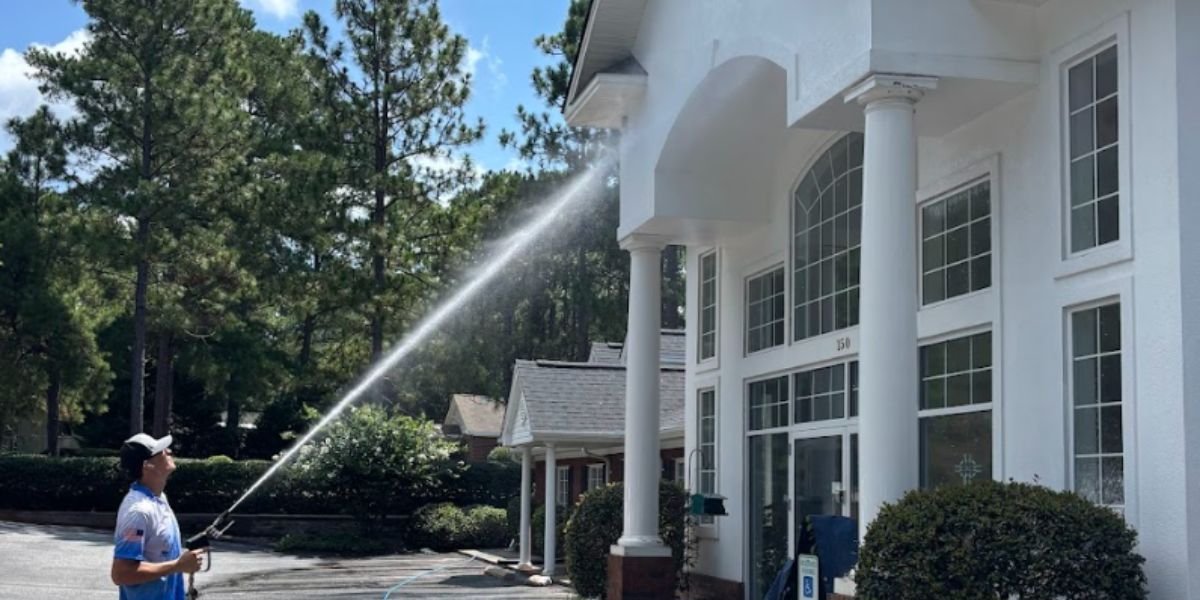
Our team also handles patio and deck pressure washing, driveway cleaning, house washing, and gutter cleaning, so your whole outdoor space gets the same careful attention. If your patio set is looking dull, stained, or covered in mildew, don’t risk it with a rental unit set to the wrong pressure.
Call Carolina Shine Exteriors at +1(910) 994-6404 to schedule a safe, professional cleaning for your patio furniture and outdoor living space. We proudly serve homeowners across the North Carolina area who want their outdoor furniture looking its best without the guesswork.