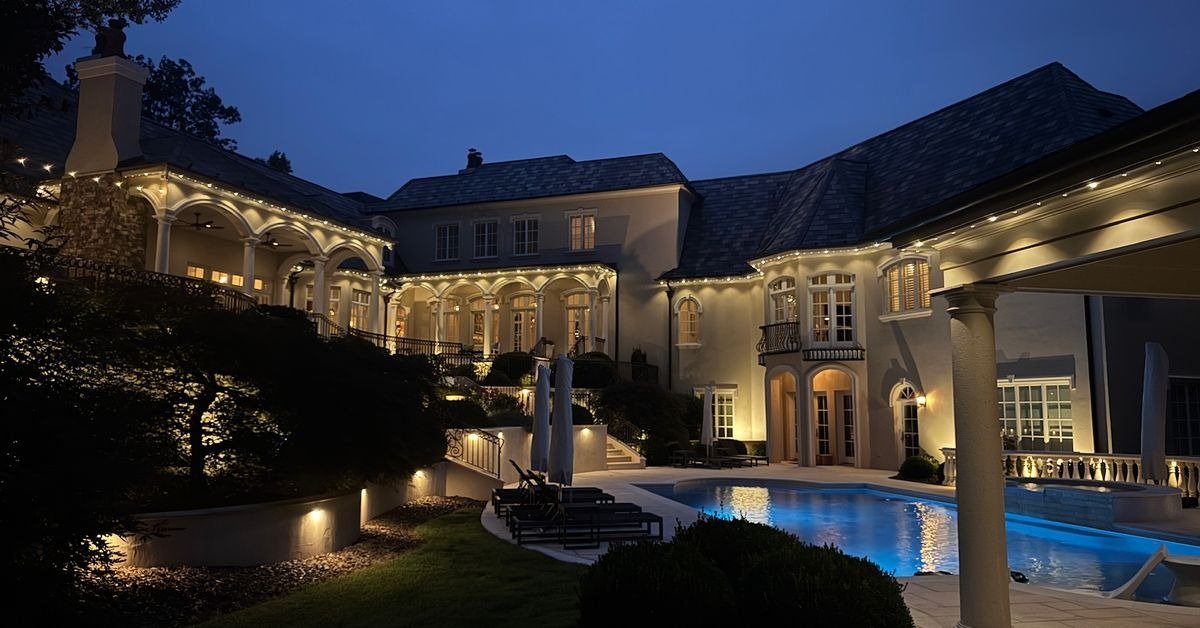
Stringing up lights every holiday season and taking them down a few weeks later gets old fast, especially once you’re standing on a ladder in the cold for the third year in a row. Permanent outdoor lighting has become the go-to solution for homeowners who want their property to look its best every night of the year, without the seasonal hassle. Carolina Shine Exteriors has been helping homeowners throughout Cameron and Central North Carolina add this kind of year-round curb appeal, and the technology behind it has come a long way from the string lights of the past.
In this guide, we’ll cover how permanent lighting systems work, what makes low-voltage options the smarter choice, and what to expect from a professional installation.
What Makes Permanent Outdoor Lighting Different
Unlike traditional holiday lights that get hung and removed every season, permanent outdoor lighting is installed once and designed to stay in place year-round. The fixtures are built to blend seamlessly into your roofline, eaves, or landscaping during the day, becoming completely invisible until they’re switched on at night.
This discreet design is a major selling point for homeowners who want the benefit of dramatic lighting without visible hardware cluttering their home’s exterior during daylight hours. Combined with app-based controls, most systems let you switch colors and patterns for any occasion, birthdays, holidays, or just a quiet evening at home, all from your phone.
Understanding Outdoor Permanent Lights and How They’re Installed
Outdoor permanent lights typically run along the roofline, soffits, or architectural features of a home, secured with mounting channels designed to withstand weather exposure for years. The installation process involves careful measurement and planning to ensure even spacing and consistent brightness across the entire display.
A quality installation also accounts for how the wiring is routed and concealed, since exposed wiring is both a safety hazard and an eyesore. Professional installers route cables discreetly, often tucking them behind trim or fascia boards so the entire system looks clean and intentional rather than tacked on as an afterthought.
Why Low-Voltage Outdoor Lighting Is the Smarter Choice
Low-voltage outdoor lighting has become the industry standard for good reason. Operating at a fraction of the electrical output of standard household wiring, these systems are significantly safer to install and maintain, particularly in areas exposed to rain, humidity, or standing water.
Beyond safety, low-voltage LED systems use far less energy than traditional lighting while still producing bright, vibrant illumination. Homeowners typically see minimal impact on their electric bill even with an extensive lighting display running nightly, making it a practical long-term investment rather than a costly indulgence.
What to Expect From Landscape Lighting Installation Day
Landscape lighting installation typically starts with a walkthrough of the property to identify architectural features worth highlighting and discuss any specific goals, whether that’s enhanced security, better nighttime visibility along walkways, or simply a striking visual display. From there, the crew maps out fixture placement before any physical installation begins.
Most residential installations are completed in a single day, depending on the size of the property and the complexity of the design. Once installed, the system is tested thoroughly to confirm even coverage and correct color calibration before the crew wraps up the job.
Maintaining Your System for Long-Term Performance
One of the biggest advantages of a professionally installed system is how little upkeep it requires afterward. Occasional cleaning to remove dust or debris from fixtures keeps brightness consistent, and most quality LED components are rated to last for years of nightly use without needing replacement.
If a fixture does malfunction, a well-installed system makes troubleshooting straightforward since components are typically modular rather than wired in a single continuous strand. This means a single issue rarely affects the entire display, and repairs can usually be handled quickly without disrupting the rest of the system.
Bringing Your Property to Life Every Night of the Year
A well-designed permanent lighting system does more than boost curb appeal after sunset; it adds a layer of security, creates a warm and welcoming atmosphere, and eliminates the yearly hassle of hanging and removing seasonal lights. Whether you’re highlighting architectural details or just want your home to stand out on the street, the right installation makes all the difference in how the final result looks and performs. Carolina Shine Exteriors brings that same attention to detail to every lighting project across Cameron and the surrounding communities.
If you’re ready to see what year-round lighting could look like on your own home, it’s worth scheduling a walkthrough before committing to any DIY string light setup.
Frequently Asked Questions
Quality LED components are generally rated for tens of thousands of hours of use, meaning most systems perform reliably for many years with minimal maintenance.
A well-designed installation keeps fixtures discreet and low-profile, so they blend into your home’s architecture during daylight and only become noticeable once illuminated at night.
Low-voltage systems operate at a much lower electrical output, reducing the risk of shock or fire hazards, especially in areas exposed to moisture or weather.
Most residential installations are completed in a single day, though larger or more complex properties may require additional time to finish properly.
Yes, most modern systems include app-based controls that let you adjust colors, patterns, and schedules for any holiday, event, or personal preference.
Not typically, low-voltage LED systems are energy-efficient enough that most homeowners see only a minimal impact on their monthly electric costs.