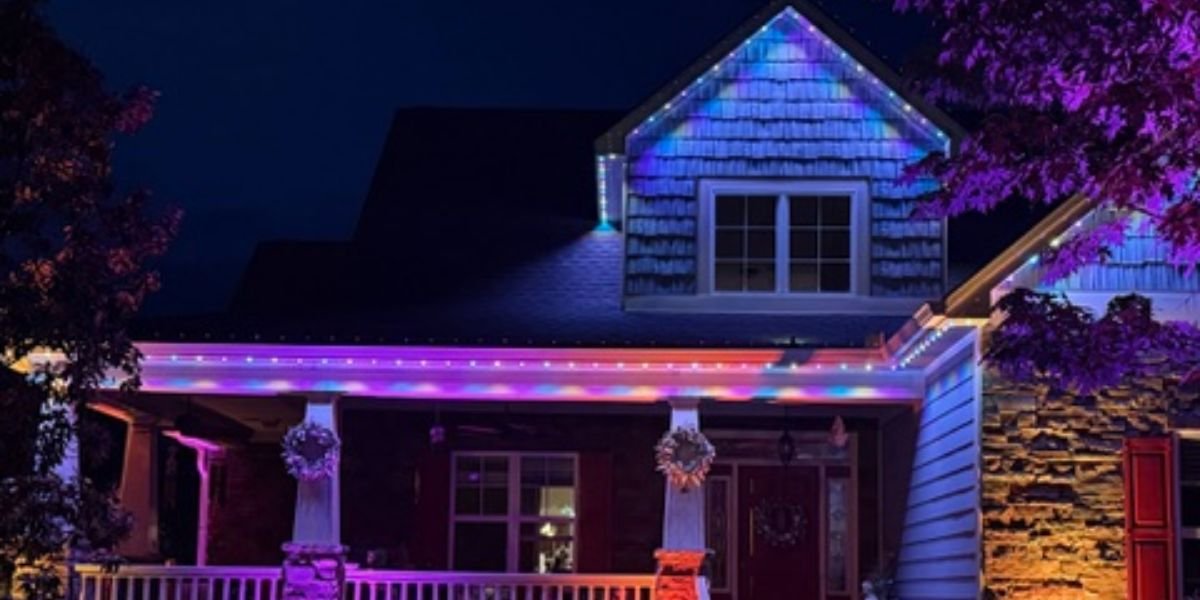
If your idea of holiday decorating still involves a ladder, a tangled bin of lights, and at least one frustrated afternoon in the cold, there’s a better way most Cameron homeowners haven’t discovered yet. Holiday permanent lighting has quickly become one of the most popular upgrades in the area, and it’s why Carolina Shine Exteriors fields calls every fall from homeowners who are done wrestling with string lights and ready for something that just works, season after season, without the annual scramble to get everything up before Thanksgiving.
This guide covers what holiday permanent lighting actually offers beyond the obvious convenience, how thoughtful design changes the whole experience, and what separates a display that looks professional from one that looks like an afterthought.
Why Holiday Permanent Lighting Beats Traditional String Lights
The appeal starts with the obvious — no more climbing a ladder in December weather, no more replacing burnt-out bulbs mid-season, and no more untangling a bin of lights that seemed fine when you packed them away last January. But the real advantage goes further. A permanent system is professionally installed once and stays in place year-round, ready to switch on for the holidays and just as easily switched to a different color palette for a birthday, a game day, or a quiet evening at home the rest of the year. It turns a once-a-year chore into a feature you actually get to enjoy, rather than something you dread as soon as the temperature drops.
How Outdoor Lighting Design Shapes the Final Look
A thoughtful outdoor lighting design is what separates a display that looks intentional from one that looks like lights were simply strung wherever they’d fit. Good design starts with identifying which architectural features are worth highlighting, rooflines, columns, window trim, or a covered porch, and planning fixture placement around those details rather than around convenience. Spacing matters just as much as placement, since uneven gaps or clustered fixtures draw the eye in the wrong direction. A well-designed system reads as a natural extension of the home’s architecture, whether it’s glowing warm white on a random Tuesday or shifting to red and green for the holidays, without ever looking like an afterthought bolted onto the roofline.
What Makes the Best Outdoor Permanent Lights Stand Out
Not all lighting systems are built the same, and the difference shows up fast once the weather turns. The best outdoor permanent lights use fixtures rated for continuous outdoor exposure, so they hold up through humidity, cold snaps, and everything else a Carolina winter brings. They also rely on true color-changing LEDs rather than a fixed set of bulbs, giving homeowners the flexibility to switch palettes for any occasion without swapping hardware. And critically, quality systems don’t flicker or dim unevenly across zones, a common giveaway of a rushed installation using mismatched components or an undersized transformer trying to power too many fixtures at once.
Why Holidays Are Just the Beginning
While the holiday season is often what pushes homeowners to make the switch, it’s rarely the only reason they end up loving the system. Once installed, most homeowners find themselves using the lights far more often than they expected — warm white for regular evenings, school colors for game day, or a soft glow just to make the porch feel more inviting on an ordinary weeknight. What starts as a holiday decision often becomes a year-round habit, since the app-controlled flexibility makes it just as easy to use in July as it is in December.
What to Expect During Installation
A proper installation starts with a walkthrough of the property to map out zones and discuss which features the homeowner wants highlighted. From there, the installer runs weatherproof wiring designed to stay hidden, positions the transformer for easy access, and configures the app so homeowners can control everything from their phone. A good installer walks through the app and answers questions before leaving, rather than treating setup as an afterthought once the physical work is done. That last step matters more than it sounds, since a system nobody knows how to use ends up underused no matter how well it was installed, which defeats the purpose of upgrading in the first place.
How to Choose the Right Company for the Job
Not every company that installs holiday lighting understands the difference between a seasonal display and a permanent system built to last. It’s worth asking how the fixtures are rated for weather exposure, what warranty coverage is included, and whether the company handles both the design and the technical installation, since splitting those responsibilities often leads to a mismatch between vision and execution. A company that walks a property with you and explains their design reasoning before quoting a price is usually the safer choice over one that just wants to get fixtures up as quickly as possible and move on to the next job on their list.
Conclusion
Holiday permanent lighting isn’t just about skipping a few cold afternoons on a ladder — it’s a long-term upgrade that changes how a home looks and feels through every season, not just the holidays. From thoughtful outdoor lighting design to fixtures built to last through Carolina weather, the details are what turn a good idea into a display homeowners actually love using year-round, long after the last string of holiday lights would have come down. When you’re ready to make your home shine beautifully in every season, Carolina Shine Exteriors is here to help bring that vision to life.
Frequently Asked Questions
Permanent lighting is professionally installed once and stays in place year-round, controlled through an app instead of being hung and taken down each holiday season.
Design determines where fixtures are placed and how evenly spaced they are, which is the difference between a display that looks intentional and one that looks randomly strung up.
Yes. Most systems are app-controlled, so you can switch between holiday colors, team colors, or a simple warm white glow for regular use throughout the year.
Look for fixtures rated for continuous outdoor exposure, true color-changing LEDs, and even, flicker-free performance across every zone rather than mismatched components.
Most residential installations take one to two days, depending on the size of the home and the number of zones, though larger properties may take longer.
Many homeowners plan to use it seasonally at first but end up using it year-round once they realize how easy it is to switch colors and patterns for everyday use.